

Finding Riverside Park on the Upper West Side
Riverside Park is a Manhattan park along the Hudson River, stretching four miles from West 72nd Street to West 158th Street. That long waterfront footprint makes it a substantial outdoor destination on the Upper West Side, as well as a companion to Central Park.
Rather than treating it as one compact garden, you can pick a stretch and explore its paths, shoreline and points of interest at your own pace.
The park descends in three terraces from Riverside Drive to the shoreline and promenade. Frederick Law Olmsted’s landscapes have been part of Riverside Park since 1875. The manmade shoreline and promenade came later, built between 1937 and 1941 under Robert Moses. Those layers help explain why a walk here can move between landscaped grounds and a constructed waterfront.
For a longer outing that includes both major green spaces, use this guide to Central Park in New York City to plan the other half of your day.
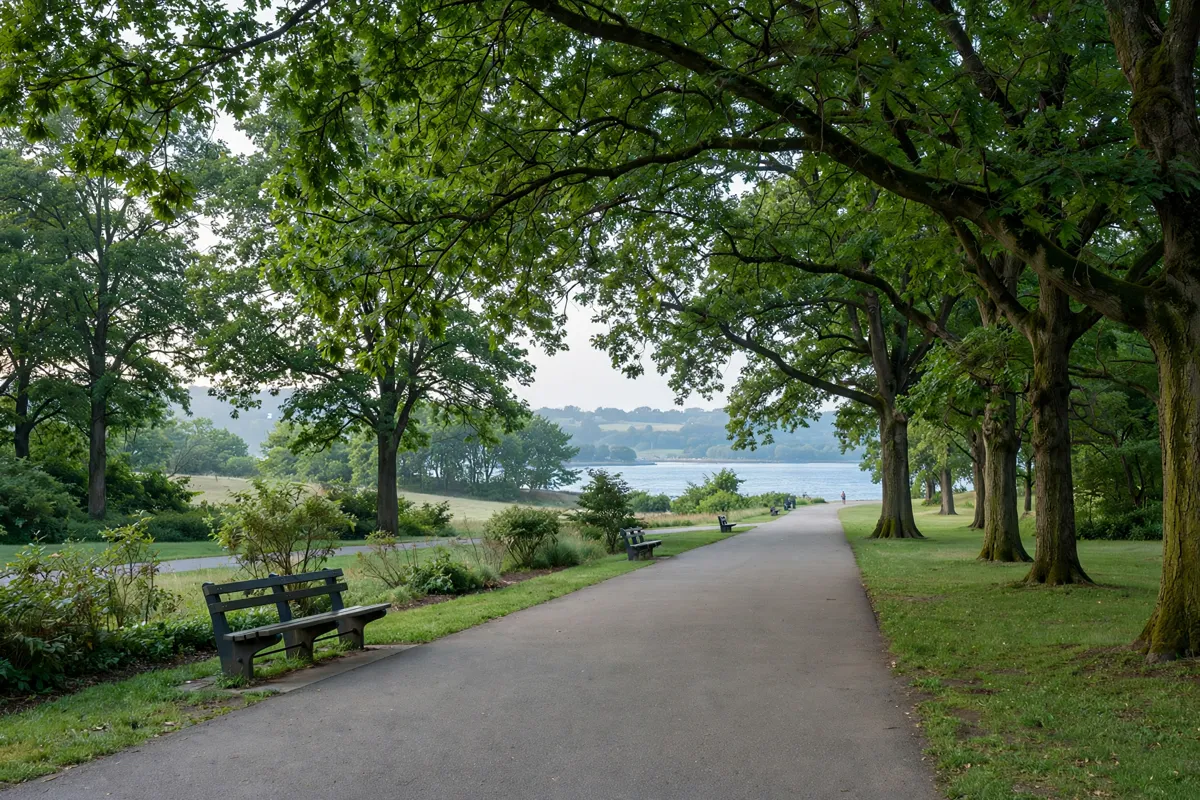
Waterfront Paths and Park Scenery
The park’s three-level layout gives you different ways to move through it: along Riverside Drive, across the middle terraces, or down by the water. The promenade follows the Hudson River shoreline, while the upper park provides another route through the grounds. You can choose a level that fits your plans, or link them where paths and access points allow.
Because Riverside Park spans four miles, it helps to choose a destination before setting out rather than assuming you’ll cover the entire park in one short stroll.
The Conservancy’s interactive map can help you find points of interest, monuments, playgrounds, restrooms, dining, pet-friendly areas and active recreation facilities. Check it to identify features near the part of the park you plan to visit.
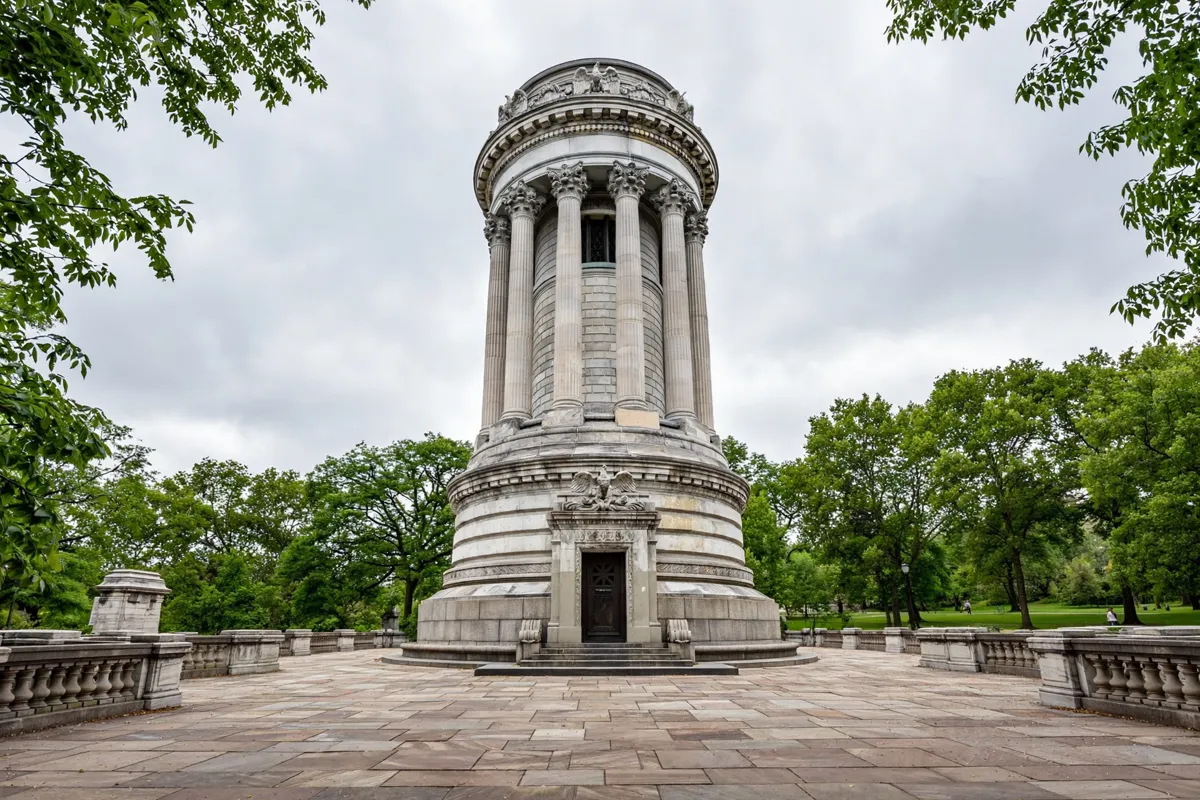
Features and Places to Look For
The park map brings together landmarks across the waterfront and its surrounding grounds. Among its listed points of interest are Soldiers’ and Sailors’ Monument, Eleanor Roosevelt Memorial, Grant’s Tomb Plaza, Little Red Lighthouse, Pier i and Riverside Park South Locomotive.
The Soldiers’ and Sailors’ Monument is one landmark to use as a focus for a visit; the others give you options to seek out elsewhere along the park.
Playgrounds include Dinosaur Playground, Hippo Playground, River Run Playground and Neufeld (Elephant) Playground. If you’re planning a stop with children, use the map to locate a playground that fits your route. It also lists public restrooms, including the 110th Street Recreation Restroom, Dinosaur Playground Restrooms, Pier i Restrooms and 102nd Street Field House Restrooms.
For active recreation, the map identifies the 96th Street Red Clay Tennis Courts, 107–108th Street Ballfields, the 101st Street Soccer Field and the 74th Street Track and Field. Tennis has its own permit requirements, so check those before you plan to play.
Places to eat listed in the park include Pier I Café at West 70th Street by the Hudson River, Ellington in the Park at West 105th Street on the Promenade, and The Getaway 151 at West 151st Street.
Entrances, Access and Park Rules
Riverside Park is open daily from 6 a.m. to 1 a.m., according to the Riverside Park Conservancy. The Conservancy also identifies four passive recreation areas where dogs, radios and team sports are not allowed: Linda’s Lawn near the river at 66th Street; South Lawn between 73rd and 75th Streets near Riverside Drive; North Lawn between 80th and 82nd Streets near Riverside Drive; and Sakura Park at 122nd Street and Riverside Drive.
Dog rules vary by time and location. NYC Parks says dogs must be leashed from 9 a.m. to 9 p.m., except in the four dog runs.
Off-leash courtesy hours run from park opening until 9 a.m. and from 9 p.m. until closing, subject to restricted areas. Dogs are not allowed on ball fields, in playgrounds or on passive-use lawns, and must be vaccinated, licensed and under their owners’ control.
Most park events, concerts, organized sports and gatherings of 20 or more require a permit. A waiver is required to use the Riverside Park Skate Park. For public tennis facilities, seasonal tennis permits or single-play passes are required between April and November; single-play tickets for the 96th Street Red Clay Courts can be purchased at the facility.
Before planning a route by transit, you can also read this Upper West Side subway guide. Park details and access can change, so check the Riverside Park Conservancy’s official site before you go.
Pairing Riverside Park with a Central Park Visit
Riverside Park and Central Park make a natural pair for an Upper West Side day outdoors, but their scale means it’s useful to choose a clear focus for each.
You might spend one part of the day following a stretch of the Hudson River promenade and looking for a park landmark, then use the Central Park guide to pick a separate area to visit.
If playgrounds, sports facilities or a meal are part of your plan, check the Conservancy map first and build your route around the features you want to reach.